A gold stone shaped like a horn that provides the owner amazing, divine visions. If you are in a quiet state of mind and body, the stone provides you with sight into the intricacies & secrets of the divine.
The stone has gone through a fair few names. Many of which are derived from Pliny the Elder’s original writing on “Hammonis” or “Hammonis cornu.”
Today, we know that this stone is actually ammonite, a fossilized shell. According to Pliny, it would make dreams come true. It isn’t surprising that the stone’s name has been shortened to just “hamon,” even though it is actually ammonite.
A red stone reputed to make its owner invincible, but it has gone by a few different names. Garatronicus, or Gagatromeus was said to, according to some versions of the legend, also aid one in battle, as Achilles was said to carry it to ensure victory.
The story changed quite a bit as it passed between writers. In his Book of Minerals, Albertus Magnus calls the stone “Gagatronica,” but does not associate it with Achilles. Instead, he claims that it was carried by Alcides, which is a much older name for Hercules that you rarely see today.
At first, the difference might appear coincidental, like the writers were describing entirely separate stones that just happened to have similar names.
But we know this isn’t actually the case. Camillo Leonardi’s account in Speculum Lapidum, includes additional details whose source, according to translator Johann Beckmann, is not actually known. Regardless, Leonardi identifies Achilles as the stone’s owner.
This shift in attribution may have resulted from an error with copying or interpretation. Remember, Magnus used the name “Alcides” rather than “Hercules,” and it’s not unlikely someone confused “Alcides” with “Achilles.”
In a way, it is more fitting that the stone would belong to the great warrior Achilles.
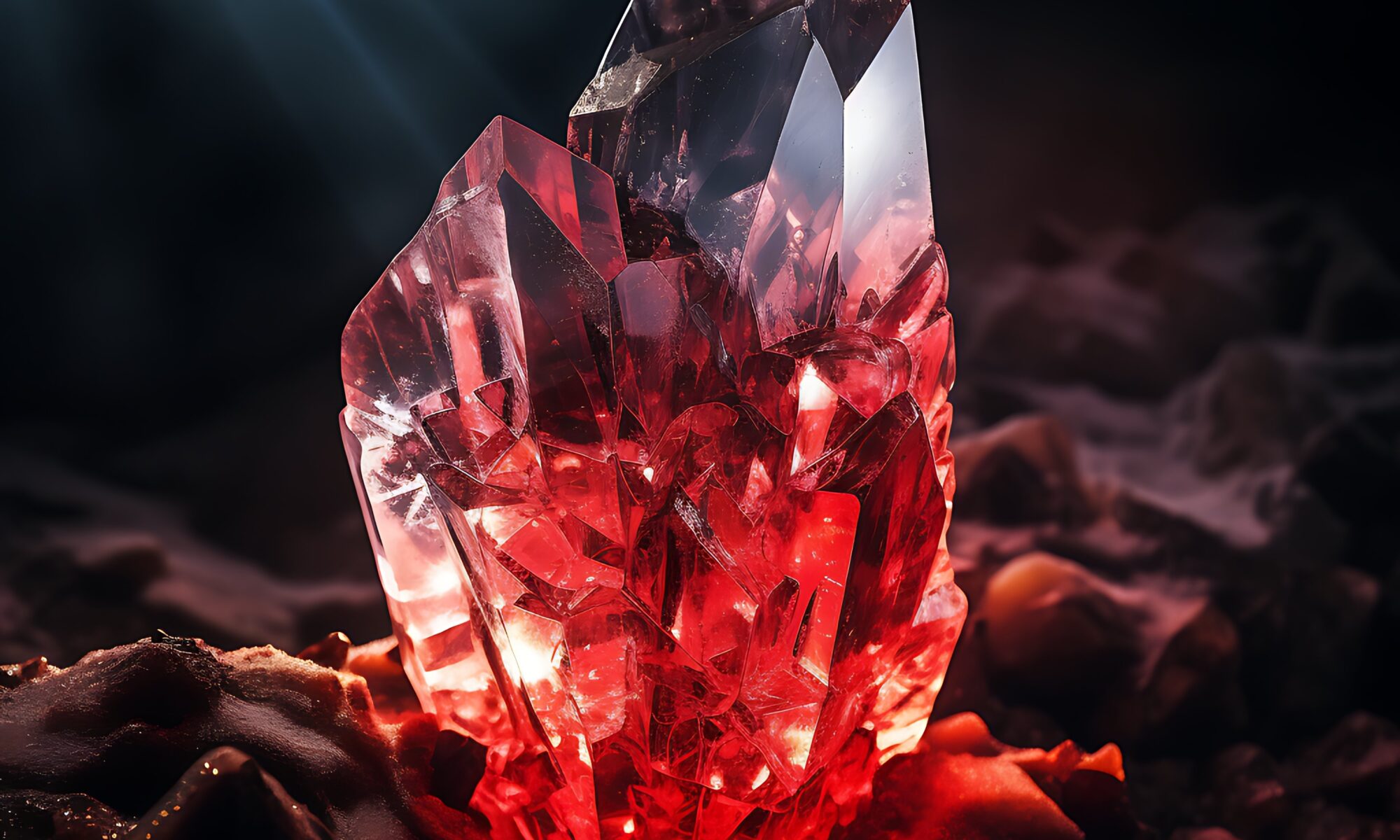
This quartz stone is typically clear, with a touch of salmon or deep red. It is said to fall from the skies to the person for whom it will provide protection, though other records describe it as a stone mined from the ground. It is said to provide protection against strikes of lightning, drowning, misfortunes, and disasters of all kinds. On a positive note, it will provide its owner with a restoring, blissful night of sleep.
Ceraunia comes from Latinized Greek “keraunos,” meaning “thunderbolt.” This word typically was reserved for stones believed to have formed from lightning strikes. So, ceraunia are known as thunderstones.
In some stories, these bolts of lightning would strike deep into the ground and rise back to the surface, causing the formation. Other tales simply said the stones formed at the place of impact.
Roman Naturalist Pliny the Elder wrote about ceraunia, one specifically that was supposedly formed when lightning struck.
These ideas persisted over the years, manifesting from time-to-time in various stories or interpretations. Eventually, these thunderstones would become prized for protection rituals and beliefs. Many sought it out in hopes to protect their homes from lightning strikes. The stone would later have other properties associated with it, such as bestowing good sleep.
Were Thunderstones Really Created by Lightning?
In most cases, thunderstones were not actually created by lightning. Rather, many of these “thunderstones” were actually prehistoric stone tools. However, they still were incredibly important discoveries for archaeology and understanding how these cultures interpreted these objects.