

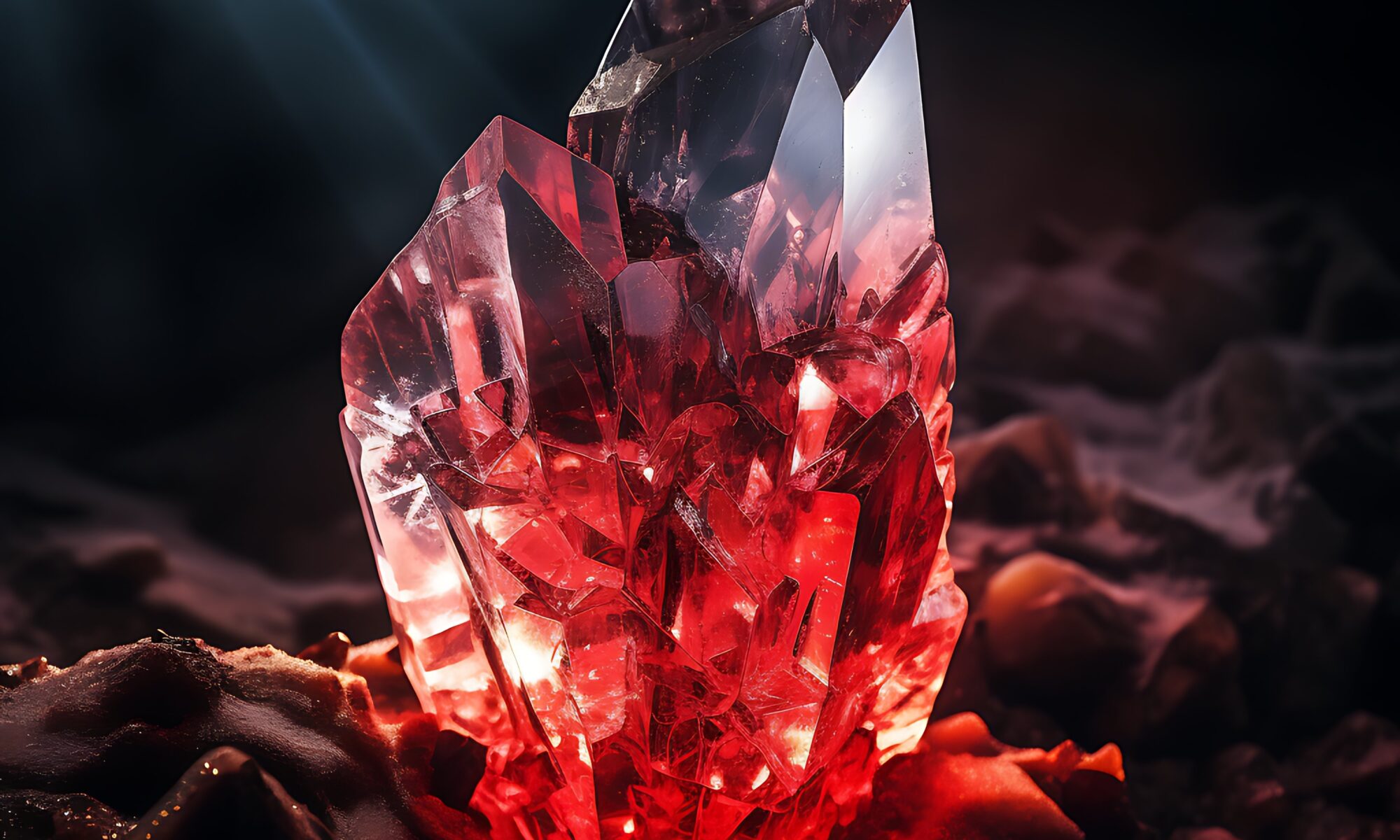
A red stone reputed to make its owner invincible, but it has gone by a few different names. Garatronicus, or Gagatromeus was said to, according to some versions of the legend, also aid one in battle, as Achilles was said to carry it to ensure victory.
The story changed quite a bit as it passed between writers. In his Book of Minerals, Albertus Magnus calls the stone “Gagatronica,” but does not associate it with Achilles. Instead, he claims that it was carried by Alcides, which is a much older name for Hercules that you rarely see today.

At first, the difference might appear coincidental, like the writers were describing entirely separate stones that just happened to have similar names.
But we know this isn’t actually the case. Camillo Leonardi’s account in Speculum Lapidum, includes additional details whose source, according to translator Johann Beckmann, is not actually known. Regardless, Leonardi identifies Achilles as the stone’s owner.
This shift in attribution may have resulted from an error with copying or interpretation. Remember, Magnus used the name “Alcides” rather than “Hercules,” and it’s not unlikely someone confused “Alcides” with “Achilles.”
In a way, it is more fitting that the stone would belong to the great warrior Achilles.