Axe Symbolism and Meaning: Power, Religion, Divination & Dreams

Axe Symbolism and Meaning: Power, Religion, Divination & Dreams

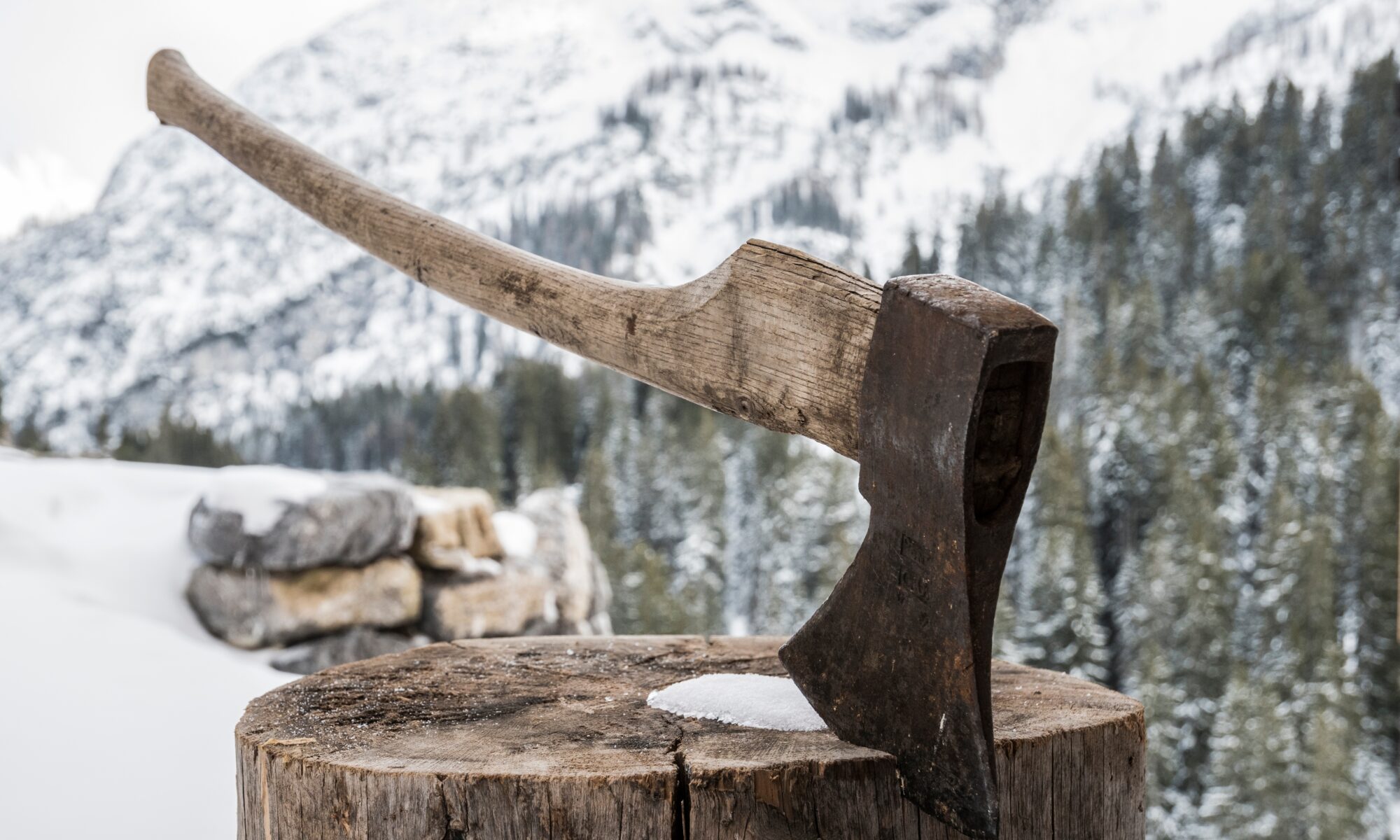
Although now it is a somewhat primitive tool, the axe has a lot of symbolism and history with power, force, and warrior culture. It has manifested in various ways across all cultures. They have appeared as weapons, ceremonial tools, religious and political emblems, and even tools for divination.
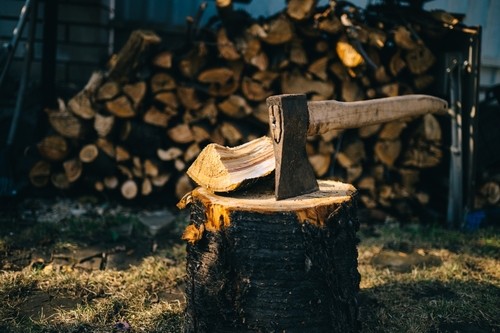
Axe lodged in stump with a large timber pile behind it

Most commonly, axe symbolism is deeply tied with force, authority, power, and strength. Sometimes, it is known as a symbol of transformation, unity, and separation. Axes can be used to hew and destroy, but it’s also used to collect timber to build shelter.

Axe Symbolism in Ancient Religion

Because axes appear in so many different cultures, there is no way we could say there is a singular kind of symbolism. Not only that, but even in one culture, there could be immense variety. Axes were tools, but they also had ceremonial purposes. Sometimes, they were big an unwieldy. In other cases, small and not likely to be used at all.

One very common symbol that has persisted is the double axe. For instance, it was an important religious symbol in Bronze Age Crete. These double-headed axes were ceremonial, and they could stand as a sign of prestige or authority.

That said, to wield an axe meant a show of power and strength. It could also show authority. In terms of ceremonial or ritual purposes, an axe was believed by some to help find treasure.

What is Axinomancy?

This is a form of divination that uses an axe. The word comes from “axe” and manteía from Ancient Greek, meaning prophecy or divination. There have been numerous accounts of how to perform divination with an axe. Across various traditions, it might involve the balance or interpretated pointing of an axe to find hidden treasure, information, or divine an answer to a question.
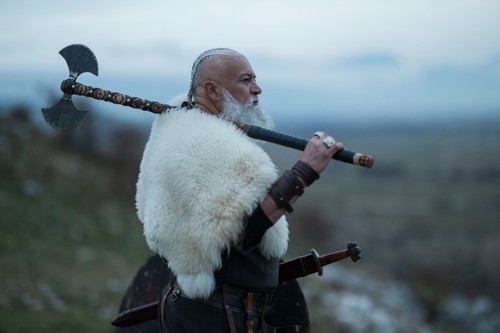
Warrior with two-headed axe

While getting treasure was nice, axinomancy could also be used, in light of evidence, to identify criminals or figure out where one might be hiding on the run.

Witchcraft also had a use for axes: witches would place an axe upright in the ground and start to ‘milk’ the handle, like someone would milk a cow. The result was supposed to be that cows in the town or village wouldn’t be able to produce milk.

Axe Dream Meaning: What Does an Axe Symbolize in Dreams?

Axes are subject to various dream interpretations. The symbolism can vary from culture to culture. For instance, in America, axes are typically connected with effort and struggle. A broken axe or a rusty one is often seen as a symbol of illness or loss. English dream interpretations typically say axes in dreams symbolize danger is coming, most commonly to a friend.

Fat of the Sorcerer: Witch Ointments & Chimney Folklore

Shaman Woman raising her hands

Christmas tradition loves the idea of a jolly Santa coming down the chimney. But long before this jovial figure were witches. Odd connection, I know. But European witchcraft lore had a common theme of witches flying in the sky and entering or exiting through chimneys. But how precisely had witches been able to perform such a feat according to the folklore? Flying ointment.

This ointment could have a rather odd or downright gross origin. Some tales say this comes from human fat. That’s already quite bad, but even further, some say it must be from murdered or unbaptized children.

This ointment could have a rather odd or downright gross origin. Some tales say this comes from human fat. That’s already quite bad, but even further, some say it must be from murdered or unbaptized children.

Less disturbing stories say the Devil taught witches how to make the ointment, or he would give it to them.

If the idea is revolting, well, that’s because it was meant to be. As far as the greater mythology goes, witches were downright cruel in European folklore. They would kill and kidnap children, form pacts with demons, destroy farms, fly about the night and cause storms, and so on.

Witch hunts in the early modern period saw all sorts of different stories developing. Magical salves and ointments were part of a broader mythological tradition that found their way into witches.

Did Witches Use this Ointment?

It’s kind of hard to say. There is some possible truth people tried to make such an ointment.

There are a few possibilities that can explain things.

For one, some historical recipes of the supposed ointment include various highly poisonous ingredients, such as hemlock, mandrake, nightshade, belladonna, and/or wolfsbane. Under no circumstance should you try to recreate such an ointment with these ingredients. They have been noted to cause delirium, confusion, hallucinations, and disturb a person’s perception of reality. So, it’s possible that this would give one the impression of flight, but it could have been in a severe delirious state.

It’s possible that hysteria, dreams, trances, or another altered state could be an explanation where the person under such an influence would believe it’s “supernatural” in that cultural framework.

Some accounts came from accused witches who were under immense pressure to confess. So, their statements are not really reliable.

It’s also worth noting that many just come from stories. It’s not unlikely that some were just that — tales. Others may have had a more mischievous intent. Some could have been warnings or moral tales from parents to children. It’s hard to say, since it’s not like a lot of this had been written down so extensively at the time.

So, we can’t really say what the exact answer is. It wasn’t a totally fabricated myth, as people tried to create something. But it’s also not entirely the case that they were hallucinogenic salves.

Broomsticks: Witchcraft History

Young Witch riding broomstick in the forest

This simple cleaning tool has been a keystone of witchcraft portrayals. Witches fly welkin high upon their wooden mount in the ebony sky. Some witches confessed to flying on a broomstick, and they have been a symbol of magic for a long time. But why?

Why are brooms associated with witches?

The image of a witch riding a broomstick is an icon of witchcraft. However, witches and warlocks were not always depicted as riding on brooms. This association developed and solidified more in the late Middle Ages, particularly in the days of witch-hunting.

A 1451 manuscript, Martin Le Franc’s Le Champion des Dames, depicts a very early illustration of a witch flying on the broomstick. However, it also shows another witch riding on a plain staff.

Not long after this depiction, a 1453 witchcraft case brought the issue of witches and broomsticks up. This case involved Guillaume Edelin, a French prior who was accused of witchcraft. In his confession, he admitted to riding a broom to get to the witches’ Sabbath. Edelin ended up repenting for the crime and spent the rest of his life in prison.

Oddly enough, prior to his accusation, Edelin denounced and ridiculed the idea of both the witches’ Sabbath and that witches could fly on brooms. His denial of such things ended up making him seem suspicious, as accusers seemingly believed Satan told him to preach such things so people would not believe it.

There is uncertainty regarding parts of the trial and interrogation. Many believe he confessed under extreme pressure, duress, or even physical torture.

If anything, this really shows us the absurdity of most witch trials. He denied witches could fly on brooms, and that is evidence of the devil telling him something.

Brooms weren’t the only flying machine for the witches. As stories developed across the late-medieval and early-modern witch periods, other objects would appear. They could be pitchforks, shovels, and even animals.

Late Middle Ages and Early Modern Period: Isobel Gowdie and the Witch’s Broom

For one reason or another, the broom remained as the most iconic instrument for flight when it came to witchcraft.

Another famous confession and account comes in 1662 from a Scottish woman: Isobel Gowdie. She gave a variety of confessions, and in one of them, she said she placed a broom in her bed and, as she left the house, recited words intended to keep it there until she returned. This account may have helped push the idea that a broom is an extension of the witch. Though, this is an early modern myth and not medieval.

Why Did Witches Fly Through Chimneys?

A fairly common element derived from witches and their broomsticks is the idea that they could fly straight out of the chimney.

In 1598, a woman named Claudine Boban was accused of witchcraft. In her account, she claimed that both she and her mother mounted a broom and shot right out of their chimney to ride to the witches’ Sabbath. This may have been a part in contributing to this idea, but this association predates her confession.

Another explanation comes from a possible tradition of women placing a broom against the door or in the chimney to let others know they were away.

Witches, Chimneys, Sickles

As the idea of witches flying into chimneys became more prominent, it led to interesting folklore developments. Why are some chimneys at an angle? Well, one of the more well-known folklore explanations in the West is the witch’s crook. According to some legends, witches can only fly their brooms in straight lines. So, to stop a witch from landing in your chimney, bend the the flue. This would stop a witch dead in their tracks.

The real explanation for why they are lopsided is more boring and is about warmth and limits. Builders would employ that bend to guide the chimney safely past roof rafters or structural beams. Then, masons would adjust the angle of the flue to make sure the chimney emerged correctly,

Though, perhaps one of the more unique, and violent, accounts comes from South Slavic folklore. Friedrich Salomo Krauss, a 19th century folklorist, described an interesting account. According to him, some might launch volleys into the sky, aimed right at the clouds, to shoot witches down. This wasn’t blind firing. Some believed that witches thrived in the dark, stormy clouds of hail and thunder. According to them, witches were the source of these storms. Others would use potent herbs and let the smoke rise high up, as some of them were believed to be the bane of witches. A bonfire also might be lit, which was supposed to offer protection against the storm and hail.

It wasn’t enough to let a bullet or even the landing finish the job. Some would deliberately place sickles, scythes, billhooks, all other types of sharp tools to cut or impale any witch that landed on them.